The brands
| Brand | From | Notes |
|---|---|---|
| Perler | USA, founded in California in 1981 | The most common brand in North America |
| Hama | Denmark, making pegboard beads since 1971 | Widely sold in Europe |
| Artkal S | China | A very large midi range, popular for detailed designs |
| Nabbi | Sweden | A smaller range, common in Scandinavia; also sells biodegradable BioBeads |
The fuse-bead pegboard itself is Swedish: Wikipedia credits Gunnar Knutsson of Vällingby with inventing it in the early 1960s, first as an activity for care homes.
This is how many colours each brand has in our palette data, which comes from the community beadcolors dataset. Each brand also sells limited and specialty colours not counted here.
| Brand | Colours in our data |
|---|---|
| Perler | 103 |
| Hama | 92 |
| Artkal S | 199 |
| Nabbi | 30 |
| MARD | 291 |
Our tools also support MARD, with 291 colours in the same dataset. MARD publishes colour codes only, so the names we show for it are descriptive (such as “Light orange”) rather than official.
Size
All four sell midi beads of about 5 mm, the standard size for children and most patterns, and they fit the same 29 × 29 square pegboards. Mini beads (about 2.5 mm) give much finer detail, and maxi beads (10 mm) suit small children; Hama suggests maxi from age 3, midi from 5 and mini from 10. Sizes are not interchangeable, so match the pegboard to the bead.
Colour
The biggest practical difference is the palette. A design made from a photo looks smoother with a larger palette, which is why many bead artists use Artkal. Smaller ranges mean more designs need approximate substitutes. Here is how well each brand converts, matching every colour to its nearest in the other brand by CIEDE2000 colour difference:
| Converting | Very close or close | Approximate | No good match | Median ΔE |
|---|---|---|---|---|
| Perler → Hama | 46% | 41% | 14% | 6.5 |
| Hama → Perler | 56% | 34% | 11% | 5.7 |
| Artkal S → Perler | 64% | 31% | 5% | 5.0 |
| Nabbi → Perler | 73% | 27% | 0% | 4.3 |
| MARD → Perler | 50% | 41% | 9% | 6.0 |
| Perler → Artkal S | 75% | 22% | 2% | 4.1 |
Two things stand out. Converting into a big palette is easy: three quarters of Perler colours have a close Artkal match. Converting between the two classic brands is harder than people expect: fewer than half of Perler’s colours have a close Hama match, and one in seven has nothing near. If you mix Perler and Hama, check each swap.
To see what palette size means in practice, we converted the same test photo to a 58-bead design in each brand:
 Perler ΔE 7.5 · 17 colours used
 Hama ΔE 6.6 · 17 colours used
 Artkal S ΔE 6.0 · 20 colours used
 Nabbi ΔE 6.6 · 13 colours used
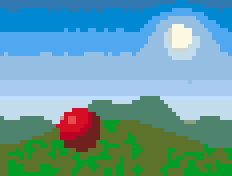 MARD ΔE 5.9 · 18 colours used
Our conversion charts show every match with its colour difference, so you can see at a glance which swaps are safe:
Specialty beads
Glow-in-the-dark, translucent, pearl, glitter and neon beads look different once ironed and rarely substitute well for flat colours. Check a colour’s name before you swap it: specialty beads are usually named for their finish.
Ironing
Different brands can melt at different rates, and even colours within a brand vary. Iron a small test square when you try a new brand or mix two, use ironing paper, and keep the iron moving. Cool the piece under a book to keep it flat.
Choosing
Pick the brand you can buy easily and in bulk: patterns can always be converted. If you mostly make designs from photos, a large palette helps; for classic sprites and simple shapes, any brand works. The bead calculator works out beads and pegboards for any size.
Buying in bulk
Large designs use thousands of beads, and the background colour often accounts for half of them. Count before you buy: the bead calculator gives a total for any grid, and every pattern on the site lists the exact number per colour. Buy the main colours in large bags from one batch, since shades can shift slightly between production runs, and smaller bags for accents. Sorting trays with lids, one compartment per colour, keep a growing collection usable.